Why Sarawak Has Its Own Immigration System
Citra Excel
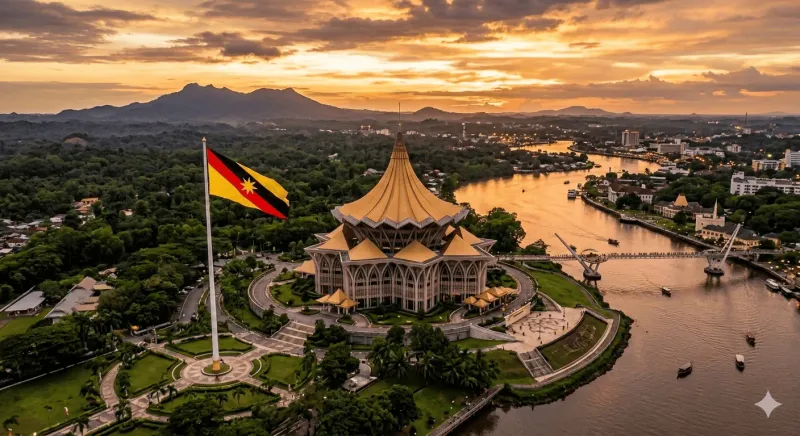
One of the most important things for employers to understand when hiring foreign workers in Sarawak is that Sarawak controls its own immigration. This is not just an administrative detail — it has real implications for how you recruit, apply for permits, and manage foreign employees.
Why Is Sarawak Different?
Sarawak's immigration autonomy is grounded in the Malaysia Agreement 1963 (MA63). Point 6 of Sarawak's 18-Point Agreement — the terms under which Sarawak joined the federation — specifically states that the federal government should not allow a person into Sarawak without the approval of the Sarawak government.
This is reinforced by Part VII of the Immigration Act 1959/63 and protected under Article 161E of the Federal Constitution, which gives Sabah and Sarawak veto rights over constitutional amendments affecting their special provisions. In practice, this means Sarawak has its own immigration policies, application processes, and approval systems — separate from those in Peninsular Malaysia.
What This Means for Employers
Sarawak's immigration autonomy has several practical consequences:
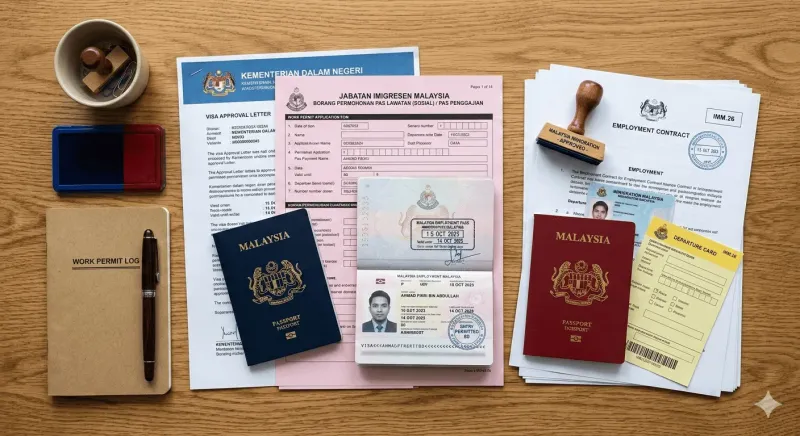
- Separate application process — Applications for foreign worker permits, employment passes, and professional visit passes must be submitted through Sarawak's own immigration channels, not through the federal system used in Peninsular Malaysia.
- Passes are not interchangeable — A work permit issued for Peninsular Malaysia is not valid for Sarawak. Similarly, a Sarawak-issued permit does not grant the right to work in Peninsular Malaysia. If a worker needs to operate in both regions, separate applications are required.
- Different government bodies — While the same national agencies exist (Immigration Department, Labour Department), Sarawak has its own offices and procedures. Jabatan Tenaga Kerja Sarawak (JTKSWK) handles labour matters specific to Sarawak.
- Companies must be Sarawak-based — To sponsor foreign workers in Sarawak, your company must be registered and operating in Sarawak. A company registered only in Peninsular Malaysia cannot directly sponsor workers for Sarawak. West Malaysian companies must set up a local subsidiary or branch office in Sarawak and obtain local business licences before they can legally sponsor any non-Sarawakian staff.
- Entry requirements — Even Malaysian citizens from Peninsular Malaysia must pass through immigration control when entering Sarawak. Foreign workers are subject to Sarawak's own entry conditions.
- Job advertising required — Before applying for most work passes, employers must post the position on JobSarawak and advertise on regional radio to obtain a Hiring Outcome Report, which typically takes 16 to 20 days.
Common Misconceptions
Misconception
“My workers have a valid permit for Peninsular Malaysia, so they can work in Sarawak too.”
Reality: No. A separate permit must be obtained through Sarawak's immigration system.
Misconception
“I can apply through the same system I used for my KL office.”
Reality: Sarawak has its own application system. The process is different and must be done through Sarawak's channels.
Misconception
“An employment agency in KL can handle my Sarawak recruitment.”
Reality: You need an agency that is licensed to operate in Sarawak and is familiar with Sarawak's specific requirements and processes.
Sarawak's Divisions
Sarawak is the largest state in Malaysia, covering a vast area with diverse industries across its divisions:
Each division has different dominant industries — from oil palm plantations in the interior to construction and manufacturing in the urban centres. Your workforce needs and the application process may vary depending on your location.
Sarawak's Own Systems
Sarawak's immigration autonomy extends beyond just separate application forms. The state operates entirely independent systems:
- Medical screening — Sarawak uses SAFHIS (Sarawak Foreigners Health Information System) for foreign worker medical examinations, not the FOMEMA system used in Peninsular Malaysia
- Identity cards — Foreign workers in Sarawak are issued a Non-Sarawakian Identity Card (NSIC), a Sarawak-specific document
- Labour licensing — Employment licences are issued under Section 119 of the Labour Ordinance (Sarawak Chapter 76), administered by JTKSWK
- Integrated digital immigration platform — Sarawak has moved its foreign worker and professional pass applications onto a unified digital system: AP, Labour Licence, and eVDR applications have been online-only through ALIANCE since 15 January 2025
Foreign Worker Identity Card (NSIC)
All foreign workers in Sarawak must obtain a Non-Sarawakian Identity Card (NSIC) issued by the Sarawak Government. This is a mandatory requirement. The card is issued during a pre-booked appointment at the ILC — booked after the PLKS is issued — where the worker's fingerprints and photo are captured.
During enforcement checks, holding a valid work permit alone may not be sufficient — authorities inspect the NSIC directly. The card contains all relevant worker information and serves as the primary identification document for non-Sarawakian workers in the state.
To apply for the NSIC, the following must already be in place:
- Approved and valid Approval in Principle (AP)
- Approved Labour Licence
- Fit status medical screening report from SAFHIS
- Visitor's Pass (Temporary Employment) / PLKS
Workers who already hold an NSIC must keep their card with them at all times. Employers should ensure that every foreign worker books the ILC appointment and obtains the NSIC promptly once the PLKS is issued. For more details, visit genesis.sarawak.gov.my — Foreigner Identity Card.
Immigration & Labour Integrated Centre (ILC)
NSIC capture, ALIANCE-platform helpdesk support, and several other in-person foreign-worker steps happen at the Immigration & Labour Integrated Centre (ILC) in Kuching. For the address, hours, what ILC handles, and what to bring, see our dedicated ILC Kuching guide.
Why This Matters
If you are a business expanding into Sarawak from Peninsular Malaysia, or if you are an international company setting up operations in Sarawak, understanding immigration autonomy is essential. Working with a local agency that knows Sarawak's system ensures your applications are submitted correctly and processed smoothly.
Frequently Asked Questions
Why does Sarawak have its own immigration system?
Sarawak's immigration autonomy is grounded in the Malaysia Agreement 1963 (MA63) and Point 6 of Sarawak's 18-Point Agreement — the terms under which Sarawak joined the federation. This is reinforced by Part VII of the Immigration Act 1959/63 and protected under Article 161E of the Federal Constitution.
Is a work permit from Peninsular Malaysia valid in Sarawak?
No. A work permit issued for Peninsular Malaysia is not valid in Sarawak, and vice versa. Employers must apply through Sarawak's own immigration channels. If a worker needs to operate in both regions, separate applications are required for each.
Does Sarawak use the same medical screening as Peninsular Malaysia?
No. Sarawak uses SAFHIS (Sarawak Foreigners Health Information System) for foreign worker medical examinations, not the FOMEMA system used in Peninsular Malaysia. Foreign workers must undergo SAFHIS screening at a panel facility within 30 days of arriving in Sarawak.
Do West Malaysians need a permit to work in Sarawak?
Malaysian citizens from Peninsular Malaysia must pass through immigration control when entering Sarawak. While Malaysians do not need a work permit, companies wishing to sponsor foreign workers in Sarawak must be registered and operating within the state — a company registered only in Peninsular Malaysia cannot directly sponsor workers for Sarawak.
What is the NSIC and is it mandatory?
The Non-Sarawakian Identity Card (NSIC) is issued by the Sarawak Government to all foreign workers in the state. It is a mandatory requirement. The card is issued during a pre-booked appointment at the Immigration & Labour Integrated Centre (ILC) — booked after the PLKS is issued — where the worker's fingerprints and photo are captured.
References
- Malaysia Agreement 1963 (MA63) — UN Treaty Series, Volume 750, No. 10760
- Federal Constitution of Malaysia — Article 161E (safeguards for Sabah and Sarawak)
- Immigration Act 1959/63 (Act 155) — Part VII (special provisions for Sabah and Sarawak)
- SAFHIS — Sarawak Foreigners Health Information System
- Labour Ordinance (Sarawak Cap. 76) — Section 119 (Employment Licence)
Navigating Sarawak's immigration system? Citra Excel is based in Kuching and operates exclusively within Sarawak's immigration framework. We are local experts who understand the process inside and out. Contact us to discuss your needs.
Sources
- GENESIS — Gateway and Employment for Non-Sarawakians via Sarawak's Integrated System: Confirms Sarawak's separate immigration system and digital platform for foreign worker management. genesis.sarawak.gov.my
- GENESIS — EXPRT FAQ: JIMS involvement and company registration requirements for Employment Pass applications in Sarawak. genesis.sarawak.gov.my/faq/?module=EXPRT
- GENESIS — Training & Compliance: Immigration & Labour Integrated Centre (ILC) locations and services for NSIC registration. genesis.sarawak.gov.my/training-and-compliance
- GENESIS — SANSOLS Foreigner Identity Card: NSIC application requirements and documents needed. genesis.sarawak.gov.my/SANSOLS/e-service/foreigner-identity-card
Our website and its contents are provided for general information purposes only and nothing on this website or in its contents is intended to provide professional advice. Please contact us at hello@citra-excel.com or +6011-1113 8685 for more information.
Need help with foreign worker recruitment?
Contact Citra Excel for a free consultation.